
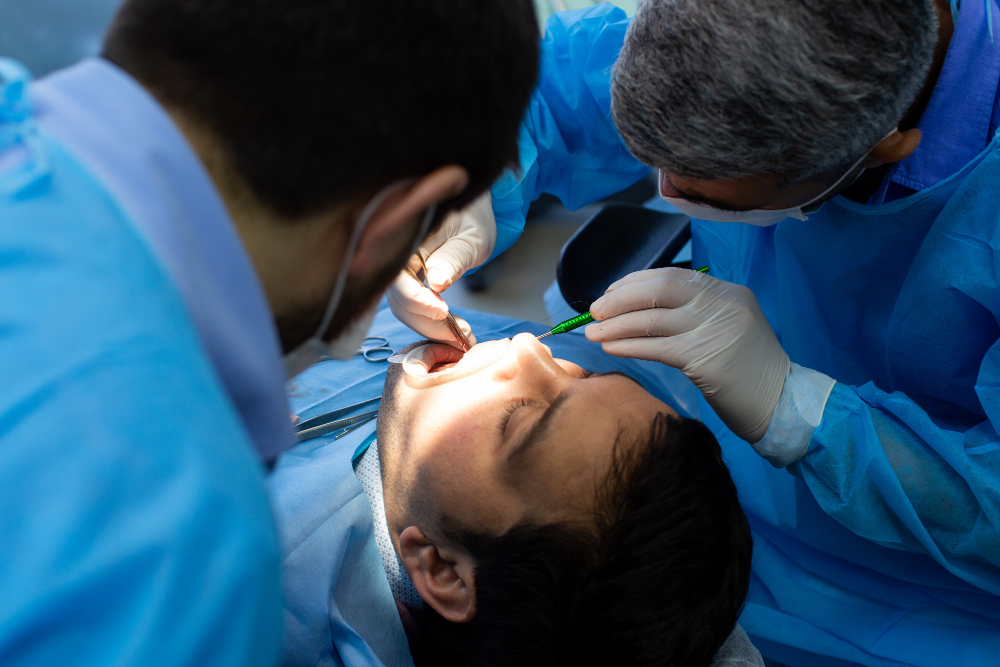
Introduction to Flap Surgery
Flap surgery in dentistry is a common gum treatment. Dentists use this dental flap procedure to treat gum disease and repair damaged tissue. During the surgery, the dentist lifts a small section of gum to clean the area underneath. This helps remove infection and allows the gums to heal. Flap surgery can save teeth and improve oral health. Many people benefit from this safe and effective treatment.
Symptoms or Dental Issues That May Require Flap Surgery
Some dental problems may lead your dentist to suggest flap surgery. For example, you may notice:
Often, these signs point to gum disease. If left untreated, the problem can get worse. Therefore, early treatment is important.
Causes or Conditions Leading to the Need for Flap Surgery
Usually, gum disease is the main reason for flap surgery. This condition happens when plaque and bacteria build up on teeth. Over time, gums become infected and pull away from the teeth. Other causes include:
Because these factors can harm your gums, it is important to manage them well.
Diagnosis and When a Dentist May Recommend Flap Surgery
First, your dentist will check your mouth and gums. They may use a small tool to measure the depth of pockets around your teeth. X-rays can also help show bone loss. If deep pockets or infection are present, your dentist may recommend a dental flap procedure. Sometimes, other treatments like deep cleaning are tried first. However, if these do not work, flap surgery may be the best option.
Step-by-Step Overview of the Flap Surgery Procedure
Flap surgery is a simple process. Here is what you can expect:
Most people go home the same day. The whole process usually takes less than an hour.
Benefits and Potential Risks of Flap Surgery
Flap surgery in dentistry offers many benefits. For instance, it can:
However, like any surgery, there are some risks. These may include:
Although these risks are rare, your dentist will discuss them with you before the procedure.
Recovery Process and Aftercare Tips
After gum surgery, recovery is usually quick. Most people feel better in a few days. To help healing, follow these tips:
If you notice heavy bleeding or pain, contact your dentist right away. Good aftercare helps speed up gum surgery recovery.
Prevention and Oral Hygiene Advice to Reduce the Need for Surgery
Preventing gum disease is the best way to avoid flap surgery. You can protect your gums by:
With good oral hygiene, you lower your risk of gum problems. Early care can help you avoid surgery in the future.
Conclusion
Flap surgery in dentistry is a safe and effective way to treat gum disease. It can help save your teeth and improve your smile. If you have gum problems or questions about the dental flap procedure, consult your dentist for personalized advice about flap surgery.